

Place of Origin:
China
Brand Name:
RPS-SONIC
Certification:
CE
Model Number:
SONO-20-2000-30L
Contact Us

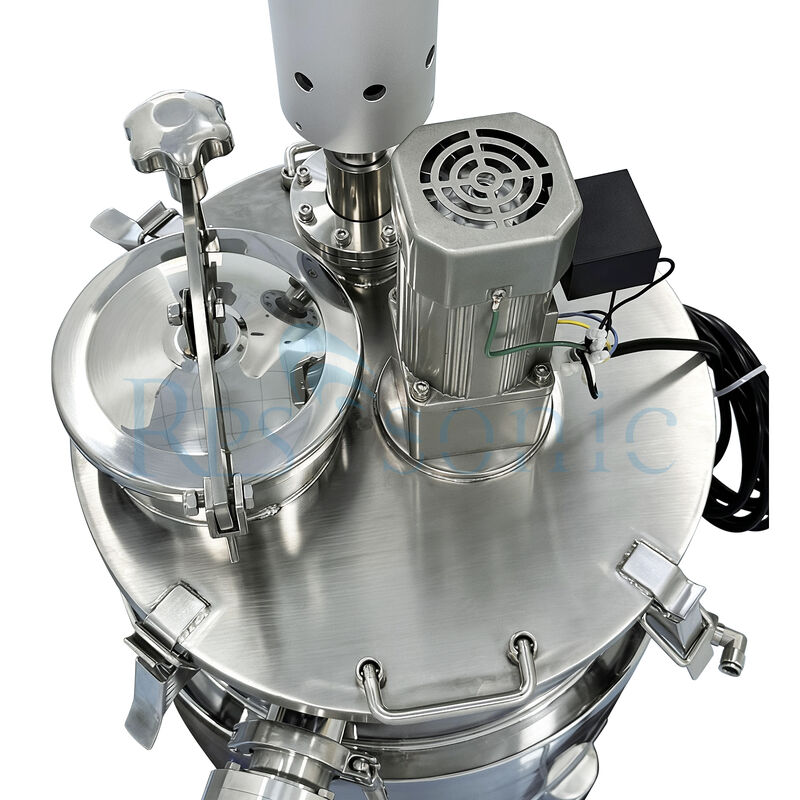


Ultrasonic mixing extraction homogenizer machine for cosmetic industry
What is the ultrasonic Homogenizer Machine ?
Ultrasonic homogenizers operate at high frequencies (typically 20–100 kHz, with industrial models up to 200 kHz) and convert electrical energy into high-frequency mechanical vibrations via a transducer. These vibrations are transmitted to a probe (horn) immersed in the liquid medium, creating the key "cavitation effect":
An ultrasonic homogenizer machine (also known as an ultrasonic sonicator or ultrasonic cell disruptor) is a high-intensity ultrasonic processing device widely used in industrial production, scientific research, and laboratory settings. Its core principle is to utilize ultrasonic cavitation effect (formation, oscillation, and implosion of microbubbles in a liquid medium) to generate intense mechanical forces, shear, and thermal effects, thereby achieving material homogenization, dispersion, emulsification, cell disruption, or particle size reduction.
Ultrasonic homogenizers are valued for their high efficiency, non-thermal damage (compared to traditional mechanical homogenization), and precise control. Typical applications include:
(1) Laboratory Research
Cell disruption: Breaking bacterial, yeast, or plant cell walls to extract proteins, nucleic acids, or enzymes (e.g., in biochemistry, microbiology).
Sample preparation: Homogenizing tissue samples (e.g., liver, muscle) for chemical analysis or immunohistochemistry.
Nano-material synthesis: Dispersing graphene, carbon nanotubes, or metal nanoparticles into liquids to form stable colloids.
(2) Industrial Production
Emulsification: Creating stable oil-in-water (O/W) or water-in-oil (W/O) emulsions (e.g., food industry: salad dressings, dairy products; cosmetic industry: creams, lotions; pharmaceutical industry: emulsified).
Dispersion: Breaking agglomerated particles (e.g., pigments in coatings, fillers in plastics, catalysts in chemical reactions) to ensure uniform distribution.
Homogenization of viscous materials: Processing polymers, resins, or adhesives to eliminate bubbles and achieve consistent viscosity.
Wastewater treatment: Degrading organic pollutants (e.g., dyes, pesticides) via cavitation-generated free radicals (·OH).
Food processing: Improving texture and shelf life (e.g., homogenizing fruit juices to prevent sedimentation, tenderizing meat).

Raw material preparation: Select biological raw materials rich in target vitamins, such as fresh fruits, vegetables, grains or microorganisms, and perform pretreatment, including washing, chopping, drying, crushing and other operations, to increase the contact area between the raw materials and the solvent and improve the extraction efficiency.
Extraction solvent selection: Select a suitable solvent according to the properties of the target vitamin. For example, for water-soluble vitamins, polar solvents such as water and ethanol-water solution are more commonly used; for fat-soluble vitamins, non-polar solvents such as n-hexane and petroleum are often used.
Ultrasonic-Assisted Extraction (UAE), as an efficient and environmentally friendly separation and extraction technology, has become a key technology for optimizing production processes, improving product quality, and promoting the transition to green manufacturing in modern industry due to its unique mechanism of action and significant advantages.
The pharmaceutical industry is one of the most mature areas for the application of ultrasonic extraction, and its importance is directly linked to quality and production economics:
Extraction of active ingredients from traditional Chinese medicines: Traditional Chinese medicine decoctions are time-consuming (several hours), resulting in low dissolution rates of active ingredients (such as alkaloids, flavonoids, and saponins), and high temperatures can damage active ingredients. Ultrasonic extraction can shorten extraction times to 30 minutes to 2 hours, increase active ingredient dissolution rates by 20%-50%, and prevent degradation of active ingredients (such as in the extraction of baicalin and artemisinin), thereby ensuring the efficacy and stability of traditional Chinese medicine preparations.
In the biopharmaceutical field, it is used for the separation of microbial fermentation products (such as antibiotics and enzymes) and the extraction of active peptides (such as collagen and growth factors) from animal tissues. Its mild extraction conditions (primarily at room temperature) preserve the structural integrity of biomacromolecules, reduce the difficulty of subsequent purification, and improve the purity and yield of.
Ultrasonic extraction can quickly produce highly active, high-purity raw materials for health supplements, such as proanthocyanidins from grape seeds, wolfberry polysaccharides from wolfberries, and phycocyanin from spirulina, meeting the health supplement industry's demand for "natural and effective" ingredients while reducing production costs.
The importance of ultrasonic extraction to modern industry lies in its fundamental reshaping of the "industrial production model" through technological innovation. It not only addresses the efficiency, cost, and pollution challenges of traditional processes, but also aligns with the core development direction of modern industry: "greening, efficiency, and quality." Against the backdrop of global energy shortages, increasing environmental pressures, and evolving consumer demand, ultrasonic extraction has evolved from an "optional technology" to an "essential technology," becoming a crucial support for industrial enterprises to reduce costs, increase efficiency, enhance competitiveness, and achieve sustainable development.
Ultrasonic homogenizer machines (also called ultrasonic sonicators or cavitators) are versatile tools leveraging ultrasonic cavitation (microbubble formation, oscillation, and implosion) to generate intense shear, impact, and thermal effects. Their core advantage lies in efficient, non-destructive (or low-destructive) processing of liquids and liquid-solid mixtures, making them indispensable across laboratory R&D, industrial production, and specialized fields (e.g., biotech, materials science). Below are their main applications, categorized by industry and use case, with technical details and typical scenarios:
1. Laboratory & Academic Research
Laboratory-scale ultrasonic homogenizers (10–500 W, 20–100 kHz) are widely used for sample preparation and small-batch experiments due to precise control, low sample consumption, and minimal damage to sensitive materials.
Key Applications:
Cell & Tissue Disruption
Purpose: Break cell walls/membranes to extract intracellular components (proteins, nucleic acids, enzymes, metabolites).
Scenarios: Bacterial (E. coli), yeast, algae, plant cells (e.g., leaf tissue), or animal tissue (liver, muscle) homogenization for biochemistry, molecular biology, or metabolomics research.
Advantage: Gentler than mechanical grinding; avoids denaturation of heat-sensitive biomolecules (short processing time, localized cavitation heat).
Sample Homogenization & Extraction
Purpose: Achieve uniform mixing of heterogeneous samples or enhance extraction efficiency of target compounds.
Scenarios:
Homogenizing food samples (e.g., milk, meat) for nutrient analysis (protein, fat, heavy metals).
Accelerating solvent extraction of plant active ingredients (e.g., flavonoids from herbs, essential oils from citrus peels) via cavitation-induced micro-mixing.
Dispersing solid particles (e.g., soil, sediment) in aqueous solutions for environmental testing (heavy metal or pollutant detection).
Nano-Material Synthesis & Dispersion
Purpose: Prepare stable colloidal dispersions or synthesize nano-scale particles.
Scenarios:
Dispersing carbon nanotubes (CNTs), graphene, or metal oxides (TiO₂, ZnO) in solvents/polymers to eliminate agglomeration (critical for electronics, composites, or coatings).
Synthesizing nano-emulsions (e.g., lipid nanoparticles for delivery) or quantum dots via cavitation-induced nucleation.
Emulsification for Analytical Chemistry
Purpose: Create stable oil-in-water (O/W) or water-in-oil (W/O) emulsions for chromatography, spectroscopy, or mass spectrometry analysis.
Example: Emulsifying fatty acids in water for gas chromatography (GC) analysis of food lipids.
2. Pharmaceutical & Biotech Industry
Industrial-scale ultrasonic homogenizers (1–10 kW) are used for scalable production, with a focus on purity, consistency, and compliance with GMP standards.
Parameter:
| Item | sono-20-1000 | sono-20-2000 | sono-20-3000 | sono-15-3000 |
| Frequency | 20khz±0.5 | 20khz±0.5 | 20khz±0.5 | 15khz±0.5 |
| Power | 1000w | 2000w | 3000w | 3000w |
| Voltage | 110 or 220V | |||
| Max temp | 300℃ | |||
| Max pressure | 35Mpa | |||
| Itensity of sound | 20W/cm² | 40W/cm² | 60W/cm² | 60W/cm² |
| Capacity | 10L/min | 15L/min | 20L/min | 20L/min |
| Material of probe | Titanium | |||
Application
Pharmaceutical industry: In the production of vitamin, ultrasonic extraction can be used to extract vitamins from natural raw materials as active ingredients of such as extracting B vitamins from yeast and extracting vitamin E from plant oils and fats.
Health care products industry: Used to produce vitamin health products, extract vitamins from natural plants or animal tissues, and make various vitamin tablets, capsules, oral liquids and other products to meet people's demand for vitamin supplements.
Food additives: Extracted vitamins can be used as food additives to fortify foods, such as adding vitamins to beverages, dairy products, cereal products, etc. to improve the nutritional value of food.
Send your inquiry directly to us

