

Place of Origin:
China
Brand Name:
Rps-sonic
Certification:
CE
Model Number:
RPS-DLT-55
Contact Us
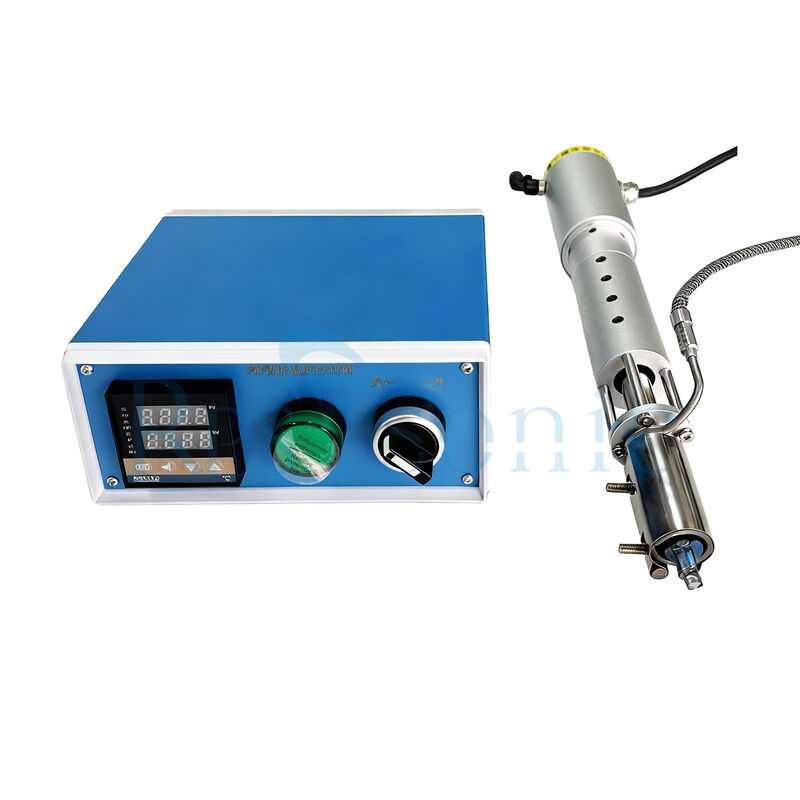
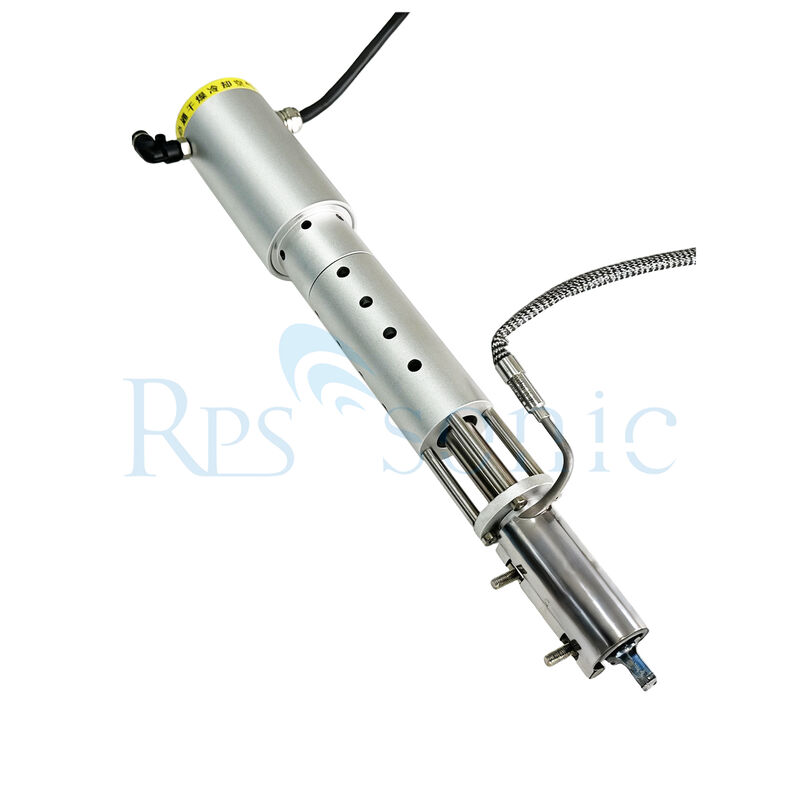
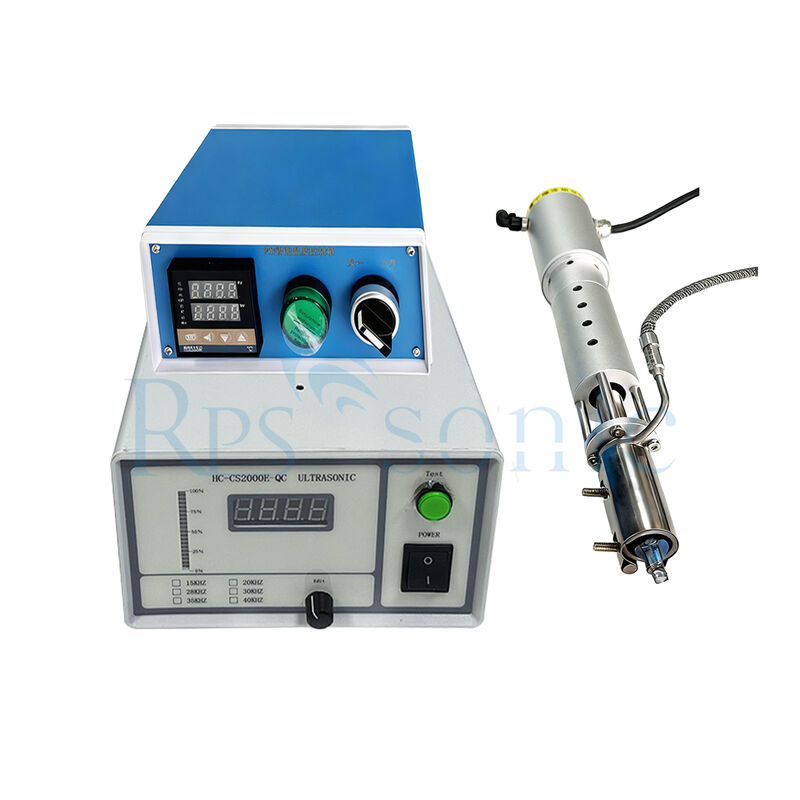

Ultrasonic soldering bonds glass titanium stainless steel ceramics
I. What is an Ultrasonic Soldering Iron?
An ultrasonic soldering iron is an environmentally friendly welding device that integrates heating and high-frequency ultrasonic vibration. Its core structure includes a piezoelectric crystal vibrating assembly, a heating element (such as the soldering iron tip), and a metal soldering tip. The ultrasonic power (10~50W), vibration frequency (typically 20~60kHz), and welding temperature (adjustable range of 120-400℃) can be precisely controlled via a control panel. Its core working principle is as follows: first, the solder is melted by the heating element; then, high-frequency vibration energy is transferred to the molten solder. The cavitation effect generated by the vibration breaks down and disperses the oxide film on the surface of the base material. Simultaneously, the acoustic flow effect promotes the wetting and diffusion of the solder with the base material, ultimately forming a dense weld joint. High-quality welding can be achieved without the need for flux.
II. Functions of Ultrasonic Soldering Irons
* **Cleaning and Activating the Soldering Surface:** Through cavitation, ultrasonic soldering irons remove oxide films and impurities from the surface of base materials (metals, glass, ceramics, etc.), replacing the chemical cleaning effect of flux and avoiding residual contamination and corrosion.
* **Improving Soldering Quality:** High-frequency vibration forces liquid solder to penetrate the micropores and crevices of the base material, squeezing out solder bubbles and reducing defects such as incomplete soldering and missed soldering. This results in a non-porous, high-strength weld joint, improving connection sealing and durability.
* **Simplifying the Soldering Process:** Eliminates the need for metallization pretreatment of non-metallic materials such as glass, enabling direct brazing of dissimilar materials such as metals and glass/ceramics. This shortens the production process and reduces operational difficulty and quality risks.
* **Adapting to Diverse Soldering Needs:** Equipped with automatic frequency adjustment and precise temperature control, ultrasonic soldering irons can control solder quantity and weld thickness when combined with wire feeding devices. They are suitable for welding scenarios of different sizes and materials, accommodating both manual soldering and automated production line operations.
III. Major Application Industries of Ultrasonic Soldering Irons
* Glass Deep Processing Industry: Vacuum glass hermetically sealed bonding, LCD glass electrode welding, optical fiber glass sealing, etc.
* Electronics and Semiconductor Industry: Power semiconductor die bonding, integrated circuit lead bonding, new energy battery heat dissipation component connection, graphene/silicon carbide low-temperature brazing, etc.
* Solar Energy Industry: Solar cell (crystalline, thin film) electrode contact welding;
* Motor and Home Appliance Industry: Transformer winding welding (aluminum wire replacing copper wire welding), automotive rear window heating contact welding, home appliance sealing component connection, etc.
* Precision Manufacturing and Jewelry Industry: Optical eyeglass coating metallization, glass jewelry manufacturing, small hardware accessory bonding, etc.
* Laboratory and Special Processing Fields: Small-scale special material welding, research on dissimilar material joining processes, etc.
Compared to traditional welding processes, ultrasonic soldering irons offer several key advantages in vacuum glass welding. First, they achieve high-quality welding without flux, one of their most significant advantages. The cavitation effect of ultrasound directly removes the oxide film from the substrate surface, replacing the chemical cleaning effect of flux. This not only avoids the generation of harmful fumes and protects the production environment but also completely eliminates the impact of flux residue on packaging equipment and vacuum levels. Furthermore, it eliminates subsequent cleaning steps, significantly simplifying the production process and reducing costs. Second, the welding quality and sealing performance are superior. High-frequency vibration forces liquid solder to penetrate the micropores and crevices of the base material, sealing these tiny gaps and expelling air bubbles from the solder. This results in a porous, dense weld joint, effectively preventing defects such as incomplete welds and leaks, and significantly improving the sealing success rate and product qualification rate of vacuum glass. Furthermore, ultrasonic vibration increases the number of broken bonds on the glass surface, enabling electronic bonding between the glass and metal, and creating a tight mechanical interlocking structure between glass panes. This greatly improves connection strength and durability, ensuring the long-term sealing performance of the vacuum glass.
Moreover, ultrasonic soldering irons simplify the production process and reduce operational difficulty. The complex glass metallization layer preparation process in traditional methods can be omitted. Glass-to-metal and glass-to-glass brazing connections can be achieved directly without metallization treatment of the glass, shortening the production cycle and reducing quality risks caused by improper metallization layer preparation. Meanwhile, the ultrasonic soldering iron features automatic frequency adjustment to handle power load variations during the soldering process, ensuring soldering reliability. Its temperature can be precisely controlled via a local area network, and combined with the wire feeder and hot air preheating structure, it allows for precise control of solder quantity and solder thickness, adapting to the soldering needs of vacuum glass of different sizes and specifications. Finally, it has a wider range of applications and is more environmentally friendly. The ultrasonic soldering iron can easily solder various glass materials, such as conductive glass and soda-lime glass, to different metals, making it suitable for various soldering scenarios in vacuum glass production. Its characteristics of using no harmful chemical reagents and emitting no pollutants align with the development trend of modern industrial green production, helping enterprises achieve environmental upgrades.
Electronics Manufacturing: It is widely used in the production of printed circuit boards (PCBs), for soldering components such as resistors, capacitors, integrated circuits, etc. onto the PCB. The high precision and reliability of ultrasonic soldering ensure the quality of electronic products.
Automobile Industry: In the manufacturing of automotive electronics, such as the production of engine control units, power electronics modules, and automotive wiring harnesses, ultrasonic soldering is used to achieve reliable connections between different components.
Aerospace and Defense: Due to its high reliability and ability to handle high-performance materials, ultrasonic soldering is used in the production of aerospace and defense electronics, where the quality and reliability of solder joints are of utmost importance.
Jewelry Making: It is also employed in the jewelry industry for soldering precious metals and gemstones. The precise control and gentle soldering process of ultrasonic soldering help to avoid damage to the delicate materials and ensure the quality of the jewelry.
Structure
Ultrasonic Generator: This is the core component that generates high-frequency electrical signals to drive the ultrasonic transducer. It usually has functions such as frequency adjustment and power control to adapt to different soldering requirements.
Ultrasonic Transducer: As mentioned earlier, it converts electrical energy into mechanical vibrations. The transducer is typically made of piezoelectric materials that exhibit the piezoelectric effect, which means they can deform when an electric field is applied and generate an electric field when deformed.
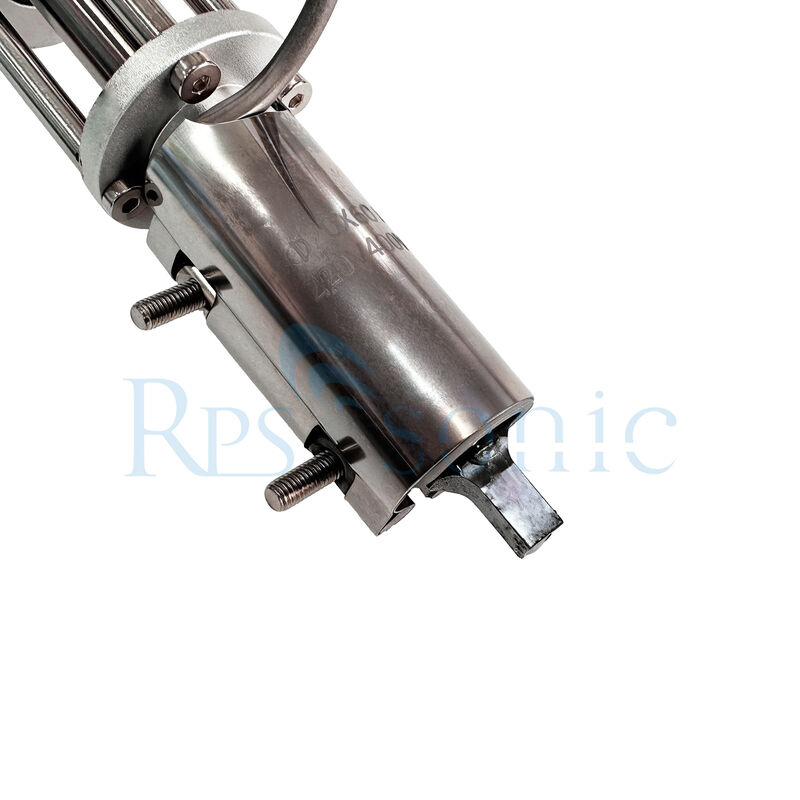
Soldering Iron Tip: The tip of the soldering iron is designed to transmit the ultrasonic vibrations to the solder and workpiece. It is usually made of heat-resistant and electrically conductive materials such as copper or tungsten alloy. The shape and size of the soldering iron tip can be customized according to different soldering applications.
Handle and Cooling System: The handle of the ultrasonic soldering iron is designed for easy operation and grip. It may also incorporate a cooling system to prevent overheating of the transducer and other components during operation. This is usually achieved through air cooling or water cooling methods.
Application Examples
Electronics Manufacturing:In the production of electronic components, it is used to solder electrodes on glass and ceramic substrates, connect superconducting materials and components, and bond leads in hybrid integrated circuits.
Optical Devices:It is used in the manufacturing of glass ornaments and the metallization of optical glasses, such as bonding metal hoops to optical glass fibers and sealing glass tubes.
Solar Energy Industry:It is used for the electrode wiring of solar cell glass, simplifying the production process and reducing costs.
Send your inquiry directly to us

