

Place of Origin:
China
Brand Name:
RPS-SONIC
Certification:
CE
Model Number:
SONO-20-2000-30L
Contact Us

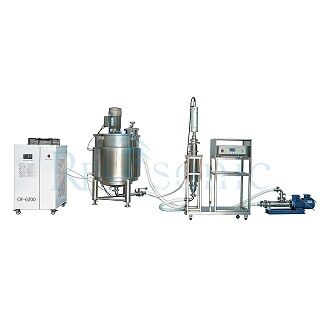
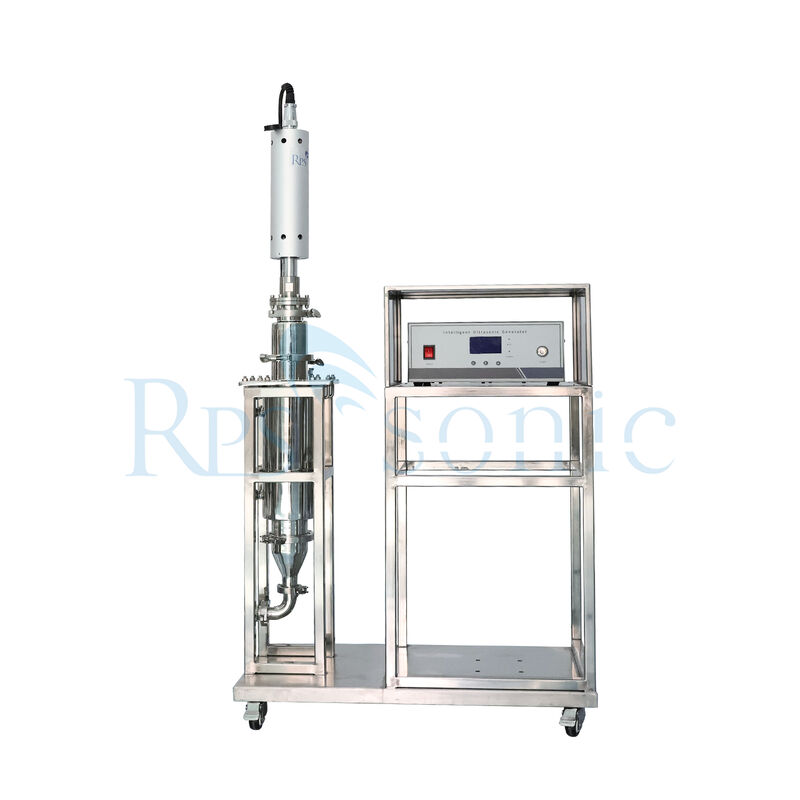
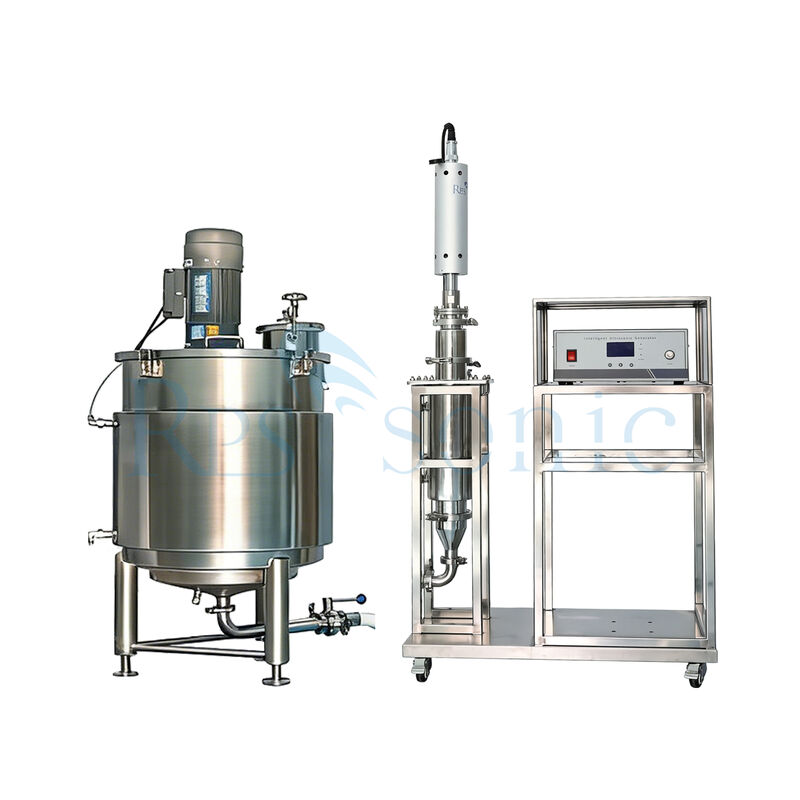
High Power Ultrasonic Kava Extraction Machine
Ultrasonic kava powder extraction is a highly efficient solid-liquid separation technology that utilizes the ultrasonic cavitation effect to enhance the extraction of active ingredients such as kava lactone from kava root powder. It boasts advantages such as short extraction time, high extraction rate, low solvent consumption, and compatibility with heat-sensitive components, and is widely used in the food, health product, and pharmaceutical industries. The core of ultrasonic extraction lies in the synergistic effect of cavitation and mechanical disturbance. Ultrasonic waves propagate in the liquid, forming a periodic pressure-vapor alternation field. Micrometer-sized cavitation bubbles are generated in the negative pressure region, and these bubbles collapse violently in the positive pressure region, instantaneously releasing localized high temperatures (approximately 5000K), high pressures (over 100MPa), shock waves, and microjets (approximately 400m/s). This powerful mechanical force directly breaks down the kava cell walls, accelerating solvent penetration and dissolution of target components, and enhancing solid-liquid mass transfer. Simultaneously, high-frequency vibration promotes uniform mixing of the system, reduces boundary layer resistance, and further improves extraction efficiency.
Raw material preparation: Select biological raw materials rich in target vitamins, such as fresh fruits, vegetables, grains or microorganisms, and perform pretreatment, including washing, chopping, drying, crushing and other operations, to increase the contact area between the raw materials and the solvent and improve the extraction efficiency.
Extraction solvent selection: Select a suitable solvent according to the properties of the target vitamin. For example, for water-soluble vitamins, polar solvents such as water and ethanol-water solution are more commonly used; for fat-soluble vitamins, non-polar solvents such as n-hexane and petroleum are often used.
Ultrasonic-Assisted Extraction (UAE), as an efficient and environmentally friendly separation and extraction technology, has become a key technology for optimizing production processes, improving product quality, and promoting the transition to green manufacturing in modern industry due to its unique mechanism of action and significant advantages.
The pharmaceutical industry is one of the most mature areas for the application of ultrasonic extraction, and its importance is directly linked to quality and production economics:
Extraction of active ingredients from traditional Chinese medicines: Traditional Chinese medicine decoctions are time-consuming (several hours), resulting in low dissolution rates of active ingredients (such as alkaloids, flavonoids, and saponins), and high temperatures can damage active ingredients. Ultrasonic extraction can shorten extraction times to 30 minutes to 2 hours, increase active ingredient dissolution rates by 20%-50%, and prevent degradation of active ingredients (such as in the extraction of baicalin and artemisinin), thereby ensuring the efficacy and stability of traditional Chinese medicine preparations.
In the biopharmaceutical field, it is used for the separation of microbial fermentation products (such as antibiotics and enzymes) and the extraction of active peptides (such as collagen and growth factors) from animal tissues. Its mild extraction conditions (primarily at room temperature) preserve the structural integrity of biomacromolecules, reduce the difficulty of subsequent purification, and improve the purity and yield of biopharmaceuticals.
Ultrasonic extraction can quickly produce highly active, high-purity raw materials for health supplements, such as proanthocyanidins from grape seeds, wolfberry polysaccharides from wolfberries, and phycocyanin from spirulina, meeting the health supplement industry's demand for "natural and effective" ingredients while reducing production costs.
The importance of ultrasonic extraction to modern industry lies in its fundamental reshaping of the "industrial production model" through technological innovation. It not only addresses the efficiency, cost, and pollution challenges of traditional processes, but also aligns with the core development direction of modern industry: "greening, efficiency, and quality." Against the backdrop of global energy shortages, increasing environmental pressures, and evolving consumer demand, ultrasonic extraction has evolved from an "optional technology" to an "essential technology," becoming a crucial support for industrial enterprises to reduce costs, increase efficiency, enhance competitiveness, and achieve sustainable development.
Parameter:
| Item | sono-20-1000 | sono-20-2000 | sono-20-3000 | sono-15-3000 |
| Frequency | 20khz±0.5 | 20khz±0.5 | 20khz±0.5 | 15khz±0.5 |
| Power | 1000w | 2000w | 3000w | 3000w |
| Voltage | 110 or 220V | |||
| Max temp | 300℃ | |||
| Max pressure | 35Mpa | |||
| Itensity of sound | 20W/cm² | 40W/cm² | 60W/cm² | 60W/cm² |
| Capacity | 10L/min | 15L/min | 20L/min | 20L/min |
| Material of probe | Titanium | |||
Application
Pharmaceutical industry: In the production of vitamin ultrasonic extraction can be used to extract vitamins from natural raw materials as active ingredients of such as extracting B vitamins from yeast and extracting vitamin E from plant oils and fats.
Health care products industry: Used to produce vitamin health products, extract vitamins from natural plants or animal tissues, and make various vitamin tablets, capsules, oral liquids and other products to meet people's demand for vitamin supplements.
Food additives: Extracted vitamins can be used as food additives to fortify foods, such as adding vitamins to beverages, dairy products, cereal products, etc. to improve the nutritional value of food.
Send your inquiry directly to us

