

Place of Origin:
China
Brand Name:
RPS-SONIC
Certification:
CE, ISO
Model Number:
RPS-SONO20-2 into 1
Contact Us
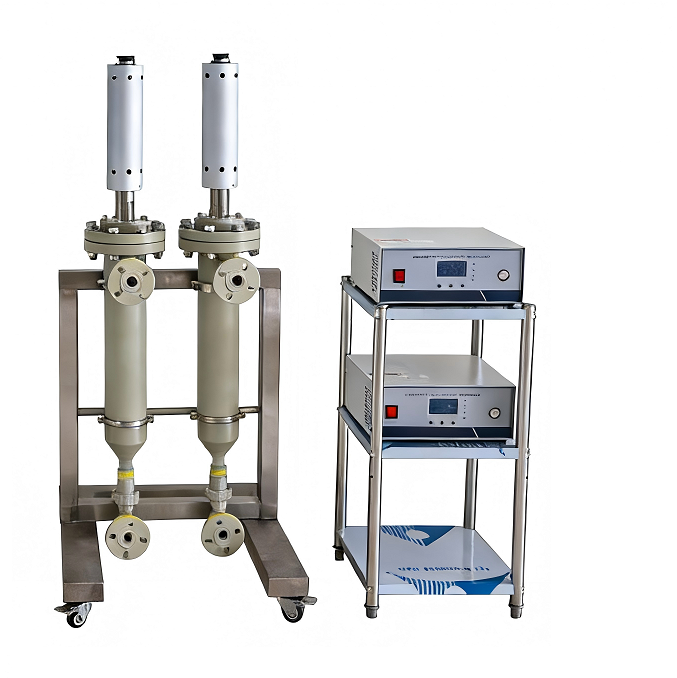
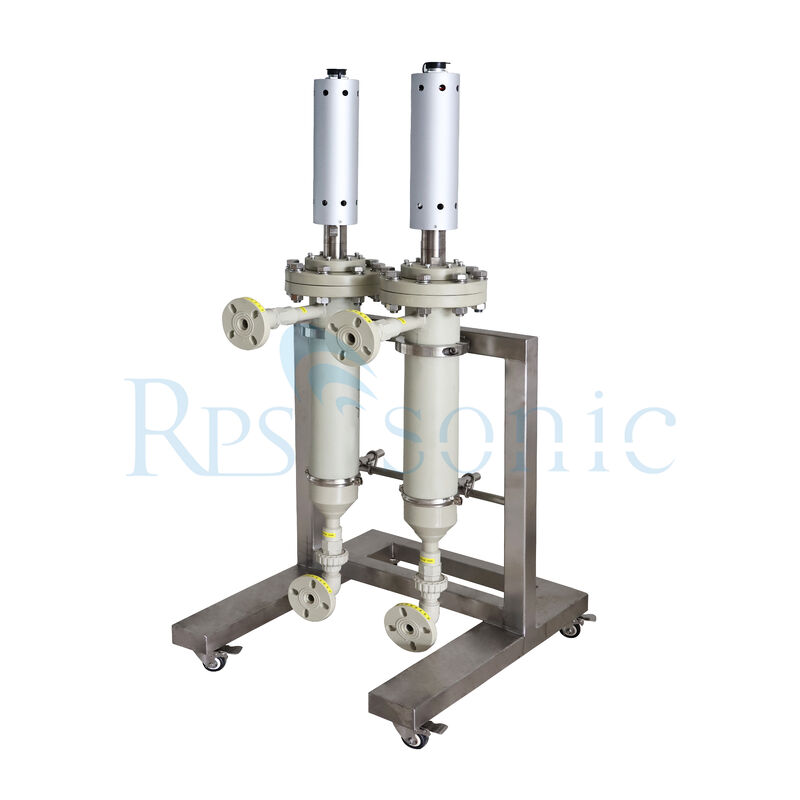
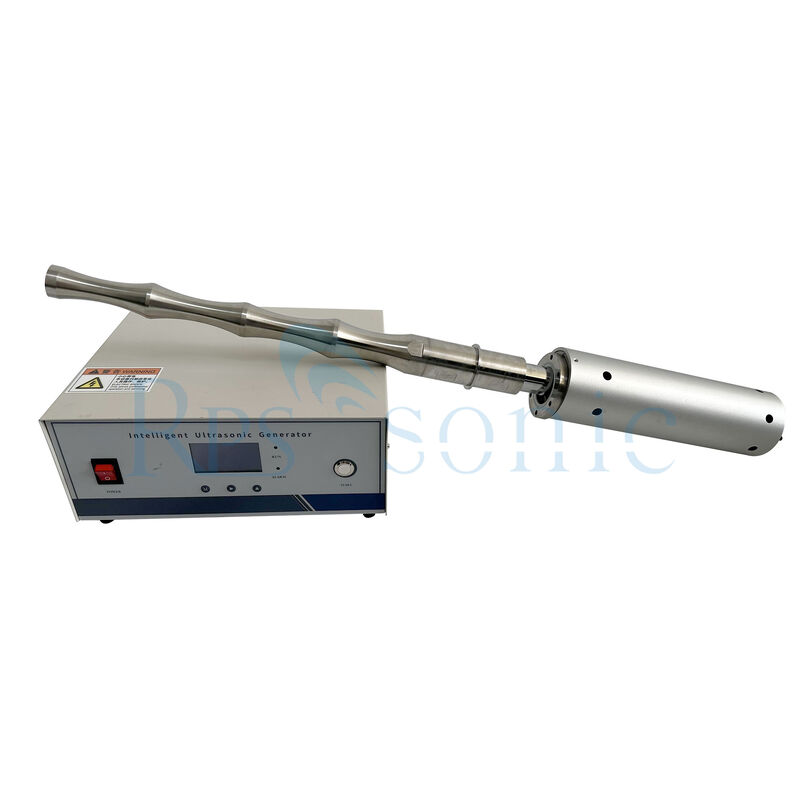
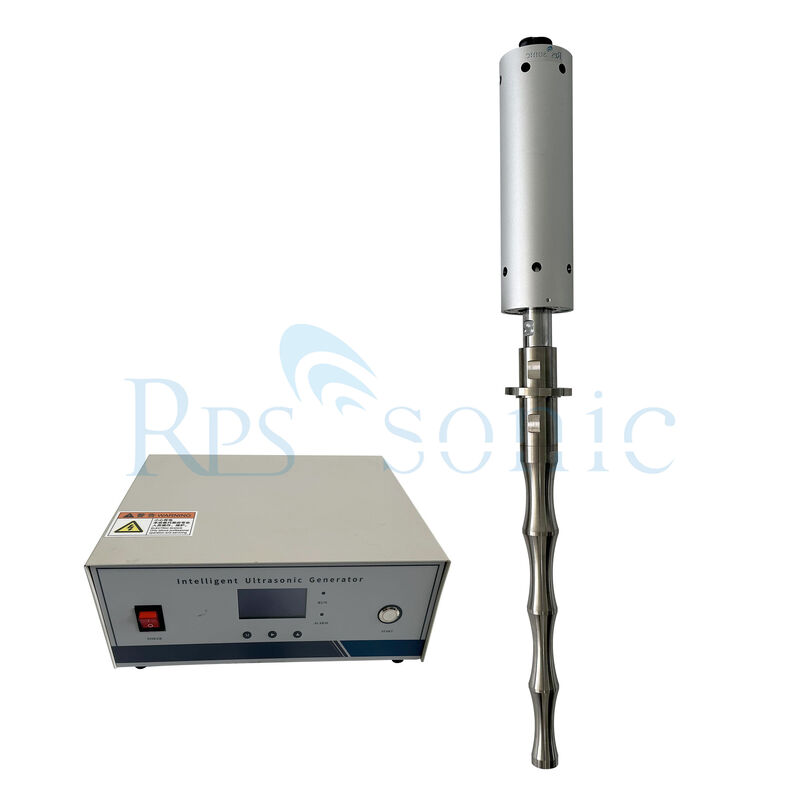

Large Power Ultrasonic carbon black dispersion machine
The essence of ultrasonic carbon black dispersion lies in utilizing the acoustic cavitation effect generated by ultrasound in a liquid medium, combined with the shearing action of high-frequency vibration, to achieve the breakup and uniform dispersion of carbon black agglomerates, while simultaneously enhancing the stability of the dispersion system. Its core mechanism can be divided into three stages: First, the generation of cavitation effect: When ultrasound (frequency typically 20kHz-100kHz) passes through the carbon black dispersion system, the liquid medium generates alternating compression and rarefaction regions. In the rarefaction stage, tiny vacuum cavitation bubbles form within the liquid; in the compression stage, these cavitation bubbles violently collapse within an extremely short time (microseconds), instantly releasing localized high temperatures (up to 5000K or higher), high pressures (exceeding 1000 atm), and microjets with velocities exceeding 100 m/s. This extreme physical action, like a microscopic "explosion," precisely impacts the weak points of the carbon black agglomerates, tearing them apart into tiny particles close to the original particles, thus breaking the agglomeration structure at its root.
Secondly, there are shearing and mixing effects: the high-frequency mechanical vibration of ultrasound induces strong turbulence and microfluidics in the dispersion medium, generating continuous shear forces that further refine incompletely broken carbon black agglomerates. Simultaneously, it promotes the uniform distribution of carbon black particles in the medium, preventing secondary agglomeration caused by excessively high local concentrations.
Finally, there is a stabilizing effect: ultrasonic vibration also accelerates the adsorption of dispersant molecules on the surface of carbon black particles, helping to form a stable adsorption layer. Through steric hindrance or electrostatic repulsion, this layer hinders the re-agglomeration of dispersed carbon black particles, extending the stability period of the dispersion system. Furthermore, ultrasonic treatment increases the polar groups on the carbon black surface, improving its dispersion compatibility in polar media. For example, experimental data show that the oxygen-to-carbon ratio on the carbon black surface can be increased from 4.2% to 7.5% after ultrasonic treatment, significantly improving its dispersion stability in aqueous systems.
An ultrasonic dispersion machine is a device that uses high‑frequency ultrasonic waves to break up agglomerated particles, mix immiscible liquids, and create stable, uniform suspensions or emulsions.
Simple explanation:
It uses ultrasonic cavitation — tiny bubbles form and collapse violently in the liquid — creating strong shockwaves and microjets that:
Break apart clumped particles (graphene, carbon nanotubes, pigments, nanomaterials)
Mix oil and water into stable emulsions
Disperse powders evenly into liquids without sedimentation
Main uses:
Dispersing graphene, CNTs, nanoparticles
Making inks, coatings, battery slurries
Preparing emulsions in cosmetics, food
Key structure:
Ultrasonic generator
Transducer (converts electricity to vibration)
Probe / horn (delivers vibration into liquid)
Parameter
| Model | SONO20-1000 | SONO20-2000 | SONO15-3000 | SONO20-3000 |
| Frequency | 20±0.5 KHz | 20±0.5 KHz | 15±0.5 KHz | 20±0.5 KHz |
| Power | 1000 W | 2000 W | 3000 W | 3000 W |
| Voltage | 220/110V | 220/110V | 220/110V | 220/110V |
| Temperature | 300 ℃ | 300 ℃ | 300 ℃ | 300 ℃ |
| Pressure | 35 MPa | 35 MPa | 35 MPa | 35 MPa |
| Intensity of sound | 20 W/cm² | 40 W/cm² | 60 W/cm² | 60 W/cm² |
| Max Capacity | 10 L/Min | 15 L/Min | 20 L/Min | 20 L/Min |
| Tip Head Material | Titanium Alloy | Titanium Alloy | Titanium Alloy | Titanium Alloy |
Description
Equipment Parameter Control
1. Ultrasonic Frequency: Frequency directly affects cavitation intensity and dispersion precision. For easily agglomerated powders like carbon black, low-frequency (20kHz-40kHz) ultrasound has stronger penetrating power and can effectively break up large agglomerates, making it suitable for coarse-particle-size, high-viscosity carbon black dispersion systems. High-frequency (60kHz-100kHz) offers higher dispersion precision and is suitable for carbon black dispersion requiring nanoscale refinement, such as Pt/C carbon black dispersion in fuel cell catalysts. Low-frequency ultrasound around 25kHz is the most widely used, balancing cavitation intensity and dispersant adsorption efficiency, avoiding insufficient dispersant adsorption due to excessively small cavitation bubbles at high frequencies.
2. Ultrasonic Power and Power Density: Power is a core parameter affecting dispersion performance and needs to be flexibly adjusted according to carbon black particle size and material viscosity. Low power (50%-70% of rated power) is suitable for carbon black systems with small particle sizes (10-50nm) and low viscosity, avoiding particle breakage and degradation caused by excessive power. High power (70%-90% of rated power) is suitable for carbon black materials with larger particle sizes (50-200nm) and severe agglomeration, effectively breaking down agglomerates. It is important to note that power density is more important than total power. For water-based carbon black systems, a power density of 0.8-1.2 W/cm² is recommended, while for solvent-based/UV ink carbon black systems, 1.0-1.5 W/cm² is recommended. Excessive power density (>2.0 W/cm²) may damage the carbon black structure, resulting in a bluish hue.
3. Ultrasonic Time: The ultrasonic time needs to be matched with the power and material characteristics; longer is not necessarily better. For conventional carbon black dispersion (such as initial dispersion in inks), ultrasonic treatment for 5-10 minutes is sufficient to break up aggregates. For difficult-to-disperse high-viscosity carbon black systems (such as carbon black/natural rubber composites), the treatment time can be extended to 30-60 minutes, requiring intermittent cooling (5 minutes each time) to prevent overheating of the material. Experiments show that approximately 1 hour of ultrasonic treatment at room temperature is the optimal time window for most carbon black systems. Excessive ultrasonic treatment can lead to secondary agglomeration of carbon black particles, damage to the carrier structure, and even dispersant failure.
4. Ultrasonic Mode: Pulse mode (e.g., 2 seconds on, 1 second off) is superior to continuous mode. The intermittent periods effectively dissipate heat, preventing changes in carbon black properties caused by localized overheating, and reducing wear and tear on the ultrasonic probe.
In recent years, nanomaterial B has been widely used in various industries to optimize the performance of materials. For example, adding graphene paint to the battery can greatly extend the service life of the battery, while adding silicon oxide to the glass can increase the transparency and robustness of the glass.
The core content of nanotechnology is how to solve the problem of nanoparticle agglomeration. Because nanoparticle itself is very easy to agglomerate, it is very difficult to obtain a single dispersed nanoparticle. How to uniformly disperse nanoparticles into the matrix is the key technology of nanotechnology.
In order to obtain excellent nanoparticles, an effective method is required. Ultrasonic cavitation immediately forms countless high-pressure and low-pressure areas in the solution. These high-pressure and low-pressure areas continuously collide with each other to generate strong shear force, depolymerize and reduce the size of the material. Ultrasonic waves used in the dispersion of nano-materials generally require relatively large sound pressure and ultrasonic amplitude. Therefore, horn type, that is, probe type, is more commonly used at present.
Recommendations
1. If you are new to nano materials and want to understand the effect of ultrasonic dispersion, you can use 1000W / 1500W laboratory materials.
2. If you are a small and medium enterprise that handles less than 5 tons of liquid per day, you can choose to add an ultrasonic probe to the reaction tank. You can use a 3000W probe.
3. If it is a large enterprise that needs to process dozens of tons or even hundreds of tons of liquid every day, an external ultrasonic circulation system is required. Multiple sets of ultrasonic equipment can process the circulation at the same time to achieve the desired effect.
Features
1. Unique focusing tool head design, higher energy concentration, larger amplitude and better homogenization effect.
2 The ultrasonic treatment process can be controlled, so the terminal state of the dispersion is also controllable, thereby greatly reducing the damage to the solution components.
3 It can disperse materials to nanometer level, and can handle high-viscosity solutions. The equipment can be equipped with PLC control, which makes the operation easier and the effect is more precise
Send your inquiry directly to us

